Wednesday, February 13, 2013

The Buzz about Bees

By Sandi Funke
 Photo by Jo-Ann Ordano 

© California Academy of Sciences

There’s been a lot in the press lately about bees and their decline. But why are bees important? And what can be done to stem the tide in the decline of these essential insects?

One of the main reason scientists and farmers are so concerned about the decline of bees is because they are very important pollinators. In exchange for getting “rewards,” from plants such as nectar or nutritious pollen, pollinators move pollen from one flower to another. Bees carry pollen on hairs and also special pollen-collecting body structures. When pollen lands on top of a flower’s pistil, a process begins that eventually leads to the flower growing into mature fruit. 

According to the Xerces Society, the services that bees and other pollinators provide allow 70 percent of all flowering plants to reproduce. In terrestrial ecosystems bumble bees are considered vital to the survival of countless other plants and animals. In addition to pollinating wildflowers, bumblebees’ pollination services help grow the seeds and fruit that allow for reproduction f plants and feed numerous birds and mammals. Bees are also very important pollinators for food crops.

Photo by © Charles Reeder
In California almonds, alfalfa, apples, apricot, avocados, blueberries, citrus, cherry, melons, nectarine, peach and plum are all pollinated by bees. These crops are pollinated by both honey bees and native bees. Honey bees are non-native and were introduced from Europe. In the Bay Area, native bees derive from five different bee families and are primarily solitary bees. Many people are familiar with bumble bees but other native bees that are also around include digger bees, carpenters bees, mason bees and halictids as well as others.

According to the Pollinator Project, the U.S. has lost over 50% of its managed honeybee colonies over the past 10 years.  Much of this is due to Colony Collapse Disorder.  Colony Collapse Disorder is a set of symptoms for which the cause and cure remain elusive. Native bumble bees are also thought to be in steep decline. This may be due to a disease agent that is being promulgated from bumble bees that are being commercially raised. According to the Xerces Society, habitat loss, alteration, and fragmentation, pesticide use, and introduced diseases all are contributing to the decline of bees.

Photo by George W. Robinson
© California Academy of Sciences
Scientists are pointing to a number of measures community members can take to help bees. Xerces Society runs the online Pollinator Conservation Resource Center. The center has region based hands-on information to help gardeners, farmers, and landscape professionals enact practices that conserve bees. Included on the site are plant lists, information about pesticides, native bee nest guides, and conservation guides and fact sheets. The Urban Bee Gardens website is a local Bay Area resource. This site describes that bee families that occur in our area, shares bee monitoring protocols, and includes plant recommendations for the San Francisco Bay Area. One of the authors of this fantastic resource is Dr. Gordon Frankie.

On Friday, March 1st, Pepperwood will be hosting Dr. Gordon Frankie for a free lecture on the relationship between flowers and bees. Dr. Frankie is a professor and research entomologist in the Division of Insect Biology, College of Natural Resources, University of California, Berkeley. His specialty is behavioral ecology of solitary bees in wildlands and urban environments of California and Costa Rica. He also teaches conservation and environmental problem-solving at U.C. Berkeley. Dr. Frankie has conducted bee surveys with researchers and citizen scientists as well. He is author of Native Bees and their Flowers in Urban California which came out in 2011 from California Press.

Friday, January 11, 2013

Discovering Fungi with Chris Kjeldsen

By Tom Greco

With the diverse array of plants and animals found throughout our region, the fungi kingdom is often overlooked. These fascinating organisms can be largely invisible throughout the year, living in the soil until the rains come and prompt them to “fruit.” In some species this results in the familiar shape of a mushroom, while in others the “fruit” (also called a sporocarp) remains underground.

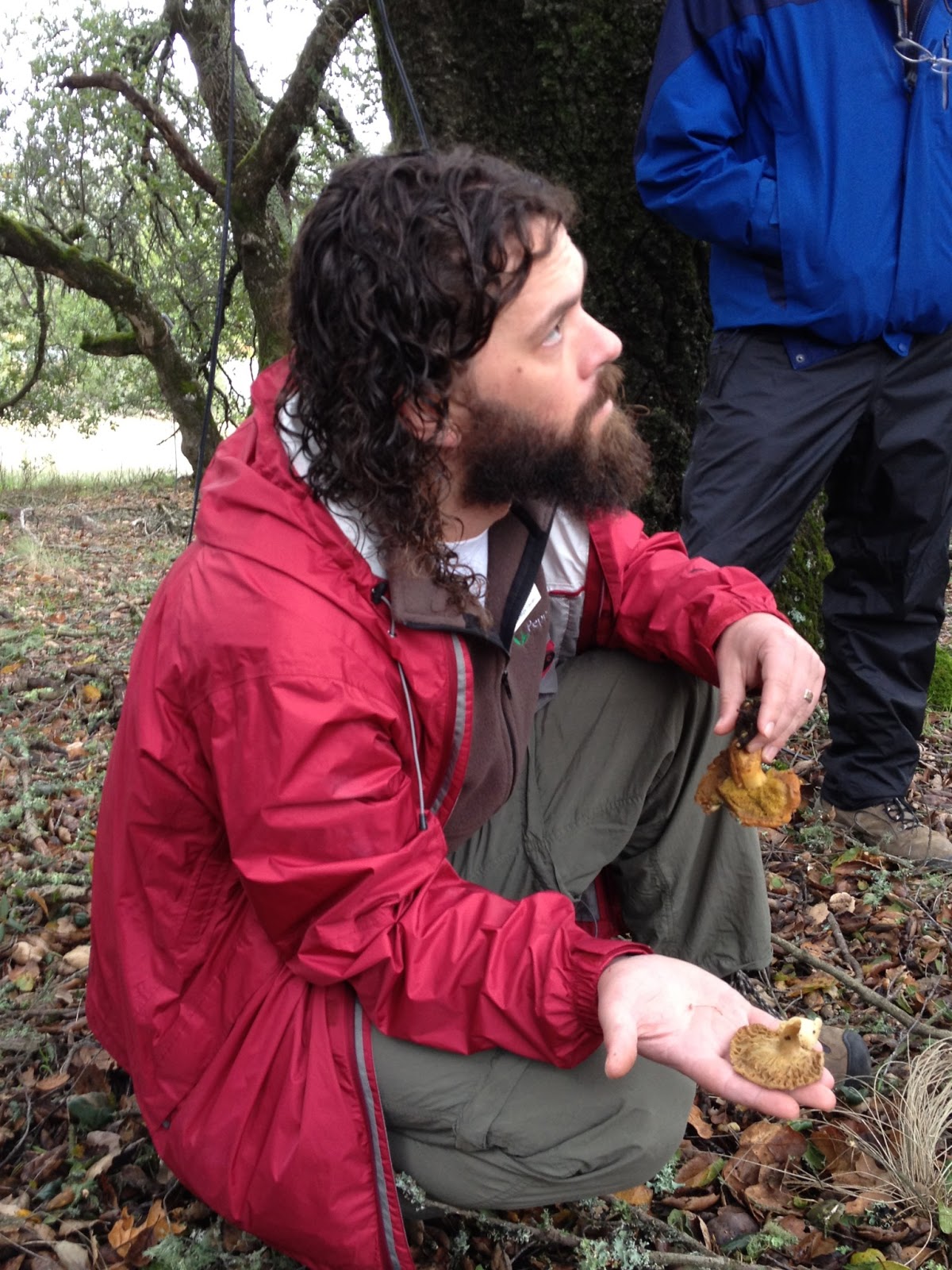
Chris Kjeldsen with a Gypsy Mushroom
Chris Kjeldsen, local mushroom expert and Professor Emeritus of Biology at Sonoma State University, visited Pepperwood in December to teach staff members about the mysterious fungi kingdom.

Beginning with a general overview, he explained that one of the most important things to know is that fungi have been on the earth for a very long time. Evidence indicates that fungi were instrumental in the spread of life from the sea to the land about 450 million years ago. 

Chris explains that “the earliest known land plant fossils show mycorrhizal associations, so the fungi are a really ancient group that are connected to higher plants in an intimate way.” 

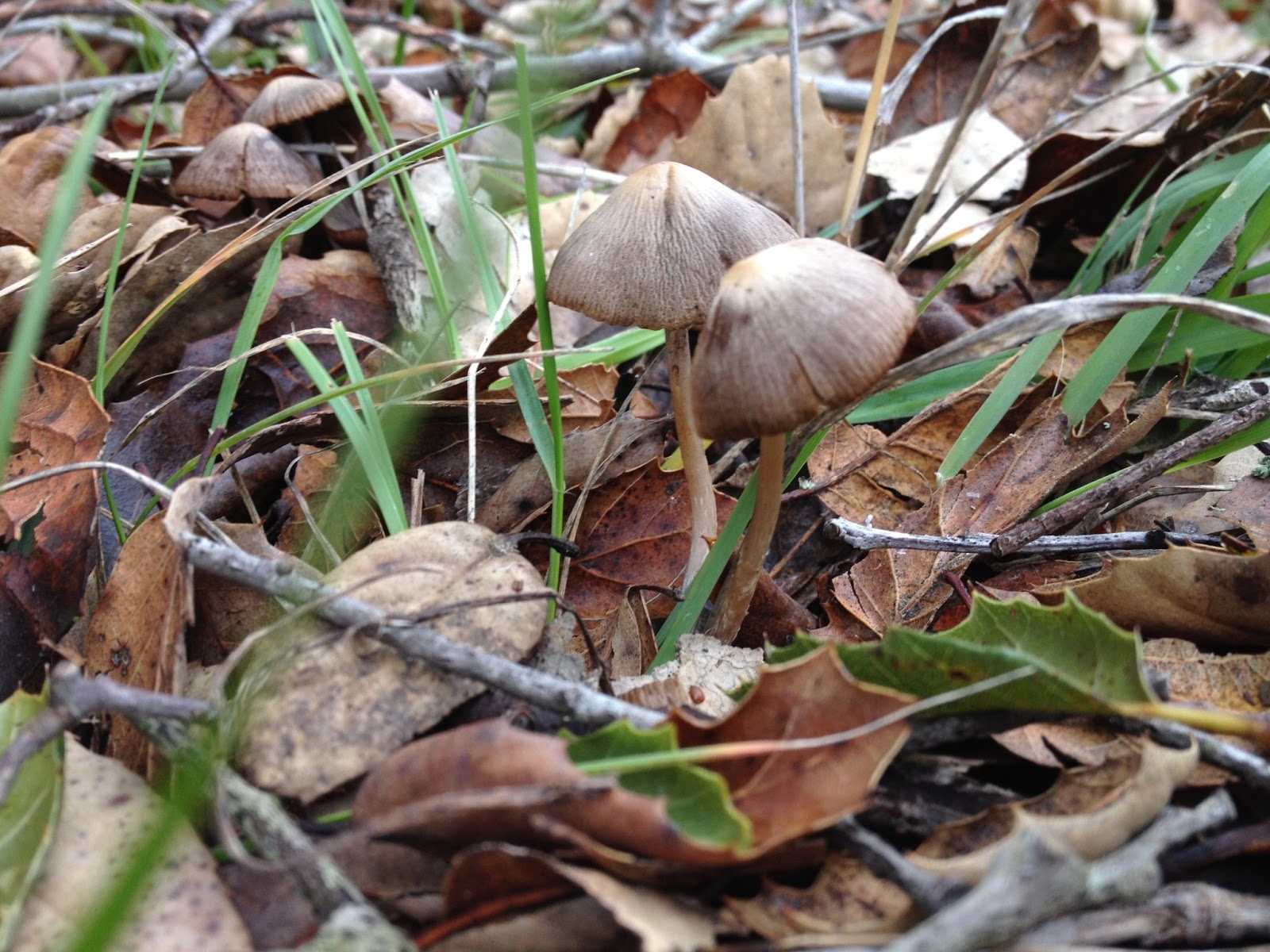
Satharella sp.


The invasion of land by plant life came not from photosynthetic organisms alone but in conjunction with fungi, indicating the two kingdoms were closely associated even long ago. Today, lichens are a great example of this inter-kingdom cooperation. They are a compound life form consisting of a fungus and a photosynthetic organism that live in a symbiotic relationship.

Gypsy Mushroom


As we investigated the mushrooms and slime molds popping up around the Dwight Center, Chris shared a fascinating story about how he became interested in fungi. When he was in junior high, his family had a place near Fort Bragg. Chris was amazed by all of the mushrooms that seemed to pop up out of nowhere every winter, and he started collecting the most unusual to show his family.  In support of his new interest, his father encouraged him to take them to a local expert.  However many of the samples were new to the expert who said that if he really wanted to learn what these were he should meet two ladies in their 70's who lived in a remote cabin in the pygmy forest of Mendocino County.

Environmental Educator Jesse Robinson
Their cabin was accessible only by a 1.5 mile long trail through old beach terraces where the nutrients had been leached out of the soil, creating unique growing conditions to which many strange fungi had adapted. The ladies were very excited to mentor Chris with his interest in fungi. He reluctantly agreed to taste some of the fungi they had preserved, including cauliflower mushroom, an experience he was unsure he would survive! These mysterious ladies, whose last names were Kelly and Boyd, were pioneering citizen scientists-a reminder that this is not a new movement! They had been documenting in tremendous detail via natural history drawings and diagrams the mushrooms they found in the forest in addition to sending samples from the pygmy forest down to UC Berkeley to build the university’s mycology collection. Without their passion and painstaking effort to document their discoveries, many generations of scientists would have lacked access to this incredible collection!

Bird's Nest Fungi

Chris’ interest in fungi continued through high school, when he collected a fruit box of assorted mushrooms and took them to Stockton where one of his father’s colleagues at the College of the Pacific, Dr. Ken Stocking, was only able to identify one – the amanita. Chris was amazed that this biology professor with his PhD could only name a single species! From then on, his path of academic study was set and in an interested twist of fate, he later taught with Dr. Stocking at Sonoma State University.


To learn more about fungi, check out the Sonoma County Mycological Association here.

Friday, December 14, 2012

Taking the Pulse of Our Watershed

By Tom Greco

Why is steam-flow monitoring important?

Pepperwood Steward Dennis Fujita, pictured above, has
been instrumental in the installation and development of
protocols for our steam-flow monitoring project

Water is the blood of life. Monitoring watersheds is extremely important because shifts in water availability and flow patterns can have drastic effects on our ability to produce food, support residential water usage and maintain fisheries. Some native species like the Coho Salmon are anadromous, meaning they dwell as adults in the ocean then ascend upstream into fresh water to lay eggs. 

Our seasonal streams serve as vital habitat for these and other threatened aquatic and riparian species.


Pepperwood is an excellent location for stream-flow research

Staff gauges being installed using a laser level earlier this year.
During the last storm event (early December), the water
reached up to the bottom of the gauge on the left, about
one meter above the bottom of the stream bed
Pepperwood’s undeveloped and protected 3,200 acres of wildlands represent a pristine slice of Bay Area ecosystem. The preserve is the headwaters of 3 different watersheds of the lower Russian River (Mark West Creek, Brooks Creek, and Franz Creek). This provides the ideal setting for a wide range of ecological research projects, including the investigation of natural water flow over and through different types of terrain. Rain falls on our section of the Mayacamas mountain range, refreshing springs and feeding our seasonal creeks before continuing down into the greater Laguna de Santa Rosa watershed, then on to the Pacific Ocean itself.

We monitor this water flow as it moves across the preserve to determine how water interacts with a natural, unaltered landscape. Our findings can help government and conservation organizations compare a pristine watershed with those under the influence of human imposed land alterations such as agricultural or residential development. Pepperwood’s Executive Director Lisa Micheli emphasizes that “by monitoring stream flow, we are taking the pulse of the watershed. The data we gather supports community water security efforts like the local Basin Advisory Panel." With this data providing a baseline, the impact of current and future development can be measured and weighed against the environmental costs.

Stream-flow monitoring methods at Pepperwood

Pressure transducer being placed in the stream bed
Pepperwood Steward Dennis Fujita spearheaded our monitoring project at Roger’s Creek, down in a canyon on the west side of the preserve. Equipment installed there includes a “pressure transducer”, which is placed at the bottom of the stream bed and measures pressure in pounds per square inch (this indicates water depth) and temperature. As the level of water increases in the stream, the pressure read by the transducer increases accordingly. Readings of stream depth are also taken manually from installed “staff gauges  which are located at two different points in the stream. These are fixed measuring sticks that provide staff and volunteers a quick and accurate way to record variations in stream depth and cross-reference with readings from the pressure transducer.

This pygmy flow meter is lowered into the stream at
different depths to measure water velocity
The third piece of equipment used is a “pygmy flow meter” on loan to Pepperwood from the Sonoma County Water Agency. This device is attached to a pole and lowered to different depths at chosen points across the stream. It has a component much like a water wheel that spins horizontally in the moving current and measures water velocity. Combined, the pressure transducer and pygmy flow meter produce enough data for us to determine the volume of water, or “discharge” passing through the Roger’s Creek stream during different seasonal events.

What is a watershed?

When rain falls on terrain, gravity dictates the path water takes from high points down to lower elevations. As it descends, it concentrates to form streams which in turn feed larger bodies of water. The Environmental Protection Agency (EPA) defines a watershed as “the area that drains to a common waterway, such as a stream, lake, estuary, wetland, aquifer, or even the ocean.” Watersheds can be defined in any range of scale, from a few acres of hills draining into a single creek to miles of landscape that supports water flow into a particular bay or ocean.

Pepperwood comprises the headwaters (the highest elevation lands in the watershed) of the Lower Russian River.

Tuesday, September 25, 2012

Penetrating the Mysteries of Fog

By Tom Greco

Anyone who has spent more than a few days in the Bay Area knows that fog is an iconic feature of the region. In the late afternoon you can often see it welling up over the ocean and beginning to roll in. By the evening many areas remain blanketed by its cool embrace until the heat of the morning sun burns it away. Fog tends to follow different flow patterns in each of the unique geographies of our area but no matter where it occurs you can be sure that it carries cool air and moisture and as a result plays an integral part in the function of our ecosystems.

Morning fog in front of the Dwight Center
The redwoods of the California coast, for example, are dependent on fog for moisture during the dry summer months of our Mediterranean climate. Their foliage even shows signs of adaptation specifically to increase capture and absorption of moisture in the air. A study conducted by Emily Limm has demonstrated that redwoods often receive up to 40% of the water they require through fog. This dependence on fog means that potential changes in the fog patterns of our region may very well effect the distribution of redwoods and populations of other plant communities – and such changes could have a significant impact on agriculture and overall environmental health.


Pepperwood’s Dr. Lisa Micheli explains that “fog is the most mysterious piece of current and future climate science.” Unlike other meteorological processes, there are no physical models capable of predicting fog formation to date. So while meteorologists forecast rain based on climatic factors like temperature and relative humidity, no such equivalent has been established for fog. “Basic empirical research is needed before we can even think about formulating accurate climate models to help us understand the role of fog in the Bay Area’s ecosystems,” says Dr. Micheli.

So what is it that makes fog so mysterious? There is a complex set of drivers that shape advective fog formation including ocean upwelling, wind speed and direction, and the differential in temperature between the ocean and the land. The challenge is determining how these factors interact with each other to create the poorly understood “flow” of fog from the sea to the land that we observe on an almost daily basis.


Pepperwood is participating in a landmark fog monitoring project with Alicia Torregrosa of the U.S. Geological Survey and other researchers from the Pacific Coastal Fog Team, a multidisciplinary group of scientists including oceanographers, meteorologists and climatologists supported by the Gordon and Betty Moore Foundation’s TBC3 to Pepperwood. The goal of the project is to map historical fog frequency distributions using archival satellite images and to develop field-based monitoring protocols that will complement these remote data sources moving forward.

Fog sensor near Pepperwood's Bechtel House
To aid in the collection of data, Pepperwood steward Dave Anderson helped install a state-of-the-art fog sensor on loan from Environment Canada for the summer of 2012 to measure visibility and liquid water content of localized fog. An identical sensor was placed at the Bodega Bay Marine Laboratory managed by UC Davis. Set 50Km apart and spanning from the coast to the Mayacamas mountains of Pepperwood, data from these sensors will help scientists better understand the process of fog as it forms over the Pacific Ocean and is pulled inland by lower pressure systems to the east.  


Get real time data from Pepperwood’s weather station.


Wednesday, September 19, 2012

Searching for Pepperwood's Reptiles and Amphibians

By Jay Scherf

Western Skink (Plestiodon skiltonianus)
Our laughter echoed up the hillside.  I mean, how often do clueless little animals bury themselves in your hair? The skink we’d caught, still young with an electric blue tail, had been brave enough to crawl out of my hand and up my shoulder. When my co-volunteer Jenny was able to fish it out of the burrow it’d made on the back of my head, it squirmed through her fingers, fell on my lap, and decided to nestle in my fly instead.

That’s what the herp survey’s about, though: looking for something to surprise us. Now, in the dry season when reptile and amphibian activity is low, Jenny and I find less animals hiding under our 18 plywood cover boards than in the spring. What does turn up, then, is often unexpected.

Western Fence Lizard (Sceloporus occidentalis) 
Like the racer we found last month at double ponds; a clever diurnal snake, it locked its gaze with mine like it knew what I was the moment I lifted it close to me. Or the nesting mouse near the observatory, huddling in its ball of moss. And the Ensatina salamander, a delicate little fingerling, hiding in an abandoned rodent burrow among the parched live oaks on Grouse Hill. Only the fence lizards skittering through the leaves, the dozens of tiny chorus frogs at the ponds, and the resident scorpion of Redwood Canyon #1 make our list without fail; whatever else we find is left to chance. 

But we always find something. That’s the thing about herps: they’re accessible, they’re easy to catch, and they make an impression on you quickly. Sure, bobcats and falcons are more impressive than bluebellys, but don’t expect to handle any soon. Herps, unlike the other vertebrates at Pepperwood, offer hands-on and intimate experience with sentient creatures of our hills. Hold scaly nature in your hand; see what this ecosystem’s made of. I can watch them breathe, feel their tongues flick me and their muscles weave, see them look me in the eye—no binoculars involved. Science gets real beyond the data sheets.

That’s the real story here, the most meaningful part of all this. Though as citizen scientists less is expected of us than in academia, the data we collect is solid, and looking at trends in our statistics tells us loads about our herps that can’t be learned by simply picking them up. That said, hard numbers lack feeling, and wouldn’t be relevant without the connections we make with animals in the field. If I’ve taken anything from the herp survey, it’s that the scientific process includes more than what’s on our clipboards. That the numbers are just a big, organized extension of the same curiosity I felt catching lizards as a kid.  - Jay Scherf

Northwestern Gartersnake (Thamnophis ordinoides )
being held by blog post author Jay Scherf
Jay Scherf is a Pepperwood volunteer who worked on our "Herp Survey" this summer. This project records counts of reptile and amphibian species present at  specific locations throughout the preserve for the  purpose of monitoring  distribution and population  over time. Jay has written for North Bay Bohemian and is currently a student at UC Berkeley.