Friday, April 12, 2013

Wildflowers in Watercolor with Pamela Glasscock

By Tom Greco

Hooker's Fairy Bells (Disporum hookerii)
Pamela Glasscock paints with a great amount of attention to detail, capturing each delicate feature of her wildflower subjects with skill and patience. Yet there is far more to her magnificent paintings than botanical accuracy – there is a story hidden within each image that reflects the people and places involved along the way to its artful transcription into watercolor.

Her subjects come from diverse sources: from local gardens to wilderness areas on the other side of the world. These varied sources of inspiration lend a subtle degree of personality to each flower, a sense of character furthered by Pam’s own lens of observation.

Shooting Star
(Dodecatheon
hendersonii)
Though it is important for Pam that her flower portraits are botanically correct, she does not measure petals and leaves as a scientific illustrator might. “What I’m trying to get at is a sense of life,” says Pam, “and to recreate the experience of looking at the actual flower.” To this end, Pam’s art captures flowers at various stages throughout their lifecycle – not just at the peak of their bloom. This adds an element of complexity to her multiple flower compositions, which contain patterns and themes that may not be perceived at first glance.

Detail: Hound's Tongue
(Cynoglossum grande)
Works like these typically originate with Pam choosing a particular flower of interest, and capturing it on a spacious piece of watercolor paper. At this point, what might eventually occupy the rest of the paper may be far from solidified in her mind – perhaps difficult to imagine given the incredible complexity of the end product. “It’s important to me to have that uncertainty and suspense about what is going in next,” says Pam. “You want to be surprised yourself and you want the people looking at the work to have the same feeling. Not planning out the whole composition ahead of time gives a sense of adventure, and even danger, to a long and meticulous process.”

Pam’s primary artistic focus has been on wildflowers for the past 10 years. Her artistic roots stretch back to silverpoint drawing as an independent project in college, which she continued for ten years in New York before beginning to experiment with watercolor under her own tutelage. Watercolor has been her preferred medium since: “I’m really interested in watercolor drawing because of its immediacy and simplicity,” says Pam. “It is all about observation.”

April/May Grasslands and Open Woods
For her most recent project, A Pepperwood Anthology: Wildflowers in Watercolor, Pam visited the preserve multiple times during the spring of 2012, when Pepperwood’s bountiful wildflower displays were at their peak. 

Pam's paintings will be on display at Pepperwood’s Dwight Center for Conservation Science Gallery during our 5th annual Wildflower Festival on April 21, 2013 from 9am to 4pm, and by appointment through May 5, 2013.

Pam will also teach a class on painting spring flowers in watercolor at Pepperwood on May 5th. Please click here for more information!

Seasonal Changes of Pepperwood with Bill Gittins

By Tom Greco


Pepperwood December 17, 2011 Solstice (11x14)
If you went looking for Bill Gittins on any equinox or solstice in the past year, you would have found him at Pepperwood with a canvas and his oil paints. As a Pepperwood Steward, Bill has been leading a plein air painting group of four artists, who have just completed a project entitled “Seasonal Changes of Pepperwood” that will be featured at Pepperwood’s Wildflower Festival on April 21st. This collection of paintings captures the changing seasons near the Redwood Canyon section of the preserve, and beautifully illustrates the ancient connection between science and the arts explored by the likes of Galileo and da Vinci.

Pepperwood March 12, 2012  Equinox (11x14)
Bill Gittins has lived in Santa Rosa since 1973 and began painting in the mid 80’s. Basically a self-taught artist, Bill began with watercolors and acrylics before finding favor in the complex texture of oil paints. His vibrant landscapes truly capture the spirit of Sonoma County: “There’s such a variety,” says Bill, describing the abundance of subject matter in our region. “There’s the coast, old barns, vineyards, hills, back roads.  A lot of my paintings were done on back roads,” explains Bill, referring specifically to Riebli Road, a unique and winding road in north east Santa Rosa close to where he used to live.

As to his preferred painting style, Bill enjoys experimenting with different color palettes, often choosing to represent an object in a different tone than may be initially observed by the eye. “I prefer a looser approach than realism,” says Bill. “I like things with a lot of color. If I go out in the field and things are dull, I like to brighten them up.”

Pepperwood June 22, 2012 Solstice (11x14)
Bill first visited Pepperwood when author and longtime Press Democrat writer Gaye LeBaron gave a talk at the Bechtel House, while the Dwight Center was being built. He really enjoyed the sweeping vistas and rolling hills – and wanted to paint them! To get an opportunity to paint on the property he enrolled in an art class being held at the preserve and then took “Bio 85: Natural History of Pepperwood,” a two-semester class offered in conjunction with the Santa Rosa Junior College that constitutes the first step to becoming a Pepperwood Steward. He has been a regular at Pepperwood since, creating spectacular renditions of preserve landscapes and generously offering his assistance at classes, hikes and events.

Bill and the other painters, which include Marsha Connell, Phil Salyer and Dale Wiley began their inaugural landscapes of the “Seasonal Changes of Pepperwood” project on the December 2011 winter solstice. There had been very little rain that winter, so Bill’s paint brush recorded mostly gold colored hills, largely uncharacteristic of the season that is typically Sonoma County’s wettest. By his March expedition the green hues had returned, along with a herd of cows (part of Pepperwood’s grazing program) that also found their way onto his canvas. “What I discovered is that the dates of the solstices are really the ‘beginning dates’ of these seasons.  We should have painted at the mid-point between the solstice and the equinox.” says Bill.  

Pepperwood September 22, 2012 Equinox (11x14)
Bill’s art, along with that of three of the other artists, will be on display, and for sale, at Pepperwood’s Wildflower Festival, held on Sunday, April 21st from 9am to 4pm. A portion of any sale at the event will be donated to the Pepperwood Foundation. You can also view a more expansive grouping of Bill’s works during the annual “Art at the Source” open studio program (Studio 76b) during the first and second weekends of June, and then again at his studio during ARTrails, held the second and third weekends of October. 

For more information about Bill and to view is online image gallery, please visit Bill’s website, www.billgittins.com.

Thursday, April 11, 2013

Wildflowers - Bloom Today, Gone Tomorrow


By Sandi Funke

Shooting Star - Dodecatheon hendersonii © 2007 Dianne Fristrom
Every year at this time I feel wistful. I gaze at of Pepperwood’s sprays of wildflowers and begin to hum the Al Dubin classic, Tiptoe through the Tulips or even Led Zepplin’s Stairway to Heaven  with its hedgerows and all. I get the crazy urge to run through the fields and spin like Julie Andrews in The Sound of Music.

As it turns out, my connection to wildflowers is reflected across countries and cultures. The Aztecs, who ruled a large portion of Mexico in the middle ages believed in a flower goddess called Xociquetzal (sho-chee-KEt-sal). Her name meant “feather flower” which probably referred to her sacred flower - the yellow marigold. Xochiquetzal was said to live in a flowery garden paradise and was married to the rain god Tlaloc. The moisture that Tlaloc created in the sky helped her flowers grow. The Greeks also had myths related to flowers. As legend tells, the fragrant flower Narcissus was said to have originated a conceited youth who loved to stare at himself by the water’s edge, which is where Narcissus grow.

Indian Warrior - Pedicularis densiflora
© 2003 Michael Charters
 But why do wildflowers come up this time of year and where do they go? Many of our wildflowers, such as our friendly bird’s eye gilia, are annuals which germinate, flower and die in less than one year or season. These species survive between generations by creating very resilient dormant seeds.

 The seeds can sometimes survive for years in the soil, and like Xochiquetzal’s marigolds, germinate when the rainfall, sunlight, and temperature are just right.  Many of these annuals flower for a few weeks or longer while others are here this week and gone the next. These very flashy wildflowers are known as “ephemerals.”

Other wildflowers native to our area are perennials and lucky for us, these individuals come back year after year. Their flowering is also triggered by weather and temperature.  Indian warrior is a beautiful maroon to pink perennial herb that blooms year after year. Henderson’s shooting star is a favorite of North Bay hikers with its dramatic thrown back hot pink to purple petals and apparent black stamens which produce pollen.


Leopard lily - Lilium pardalinum
© Tom Greco


We also have a number of perennial wildflowers that bloom from bulbs and underground swollen stems known as rhizomes. The star lily grows on rocky outcroppings and produces large clusters of pretty cream flowers in early spring.  A very common blue wildflower, whose name produces smirks when mentioned, is blue dicks. The leopard lily is a very showy, robust native wildflower that can grow over six feet tall on wet soils here at Pepperwood.
Star lily - Zigadenus fremontii© Michelle Jensen


So how can you best get out and take in this season’s boundless beauty? Pepperwood will again be hosting our annual Wildflower Festival on Sunday, April 21st. It will be great chance to go on guided wildflower walks and self guided hikes that will feature our spring wildflower display. If you can’t make it the Sonoma Ecology Center will be hosting several wildflower walks at the Van Hoosear Wildflower preserve in Sonoma.  Sonoma County Regional Parks will hosting wildflower walks at Hood Mountain and Shiloh Ranch and Landpaths will be leading a wildflower walk at Tolay Creek Ranch.


Wednesday, March 13, 2013

Get Your Kid Outside Today-They’ll Recycle Tomorrow

1st graders from Hidden Valley examine a newt at Pepperwood

by Sandi Funke

You may already know taking a young person hiking or just to explore nature is a great thing to do. It’s fabulous exercise that really is doable almost anywhere. It’s also fun!  But did you know taking a child to “wild places” can help lead them to a lifetime of conservation?

For the past twenty years, environmental researchers have wondered what actually leads to responsible environmental behavior. Dr. Louise Chawla from the University of Colorado has been interviewing environmentalists since the mid-nineties. Her work, centered in Kentucky and Norway, sought to uncover their sources of commitment to the environment. The two most frequent motives were “experiences in natural places as young people” and “family role models”. Respondents recalled places they played or hiked as children. They also talked about family members that directed their attention to certain aspects of the natural world. Research in other parts of Europe, North America, South Africa, and El Salvador has produced similar results. In 2006 researchers Dr. Nancy Wells and Dr. Kristi Lekie from Cornell surveyed 2,000 randomly selected adults from the United States. They asked them about their attitudes and behavior regarding the environment as well as childhood experiences in nature. They also found that nature activities in childhood predicted pro-environmental behaviors such as recycling and “green” voting. Getting kids into natural areas can have longstanding results.

Children hiking at our Budding Biologists day camp last summer
There are many opportunities here at Pepperwood to get into nature with your favorite young person. Our Wildflower Festival, held this year on Sunday, April 21st 2013, will have an interpretive trail to meander in between the barn and the Dwight Center. This short but steep walk may be just enough for the preschool set. We will also have opportunities to explore our new Native Plant Demonstration Garden adjacent to the Dwight Center. Then our three mile self guided trail loop will have volunteers available to provide some nature interpretation. For slightly older kids, this will be great opportunity to get out a little further out! Also that day, wildflower experts will be on hand leading botany hikes.

In addition to the Wildflower Festival, Pepperwood hosts monthly public hikes. These are usually at least four miles and involve an elevation change of at least 500 feet. Folks get to explore our various plant communities including our chaparral, grassland, oak woodlands, and more. The view of Mt. St. Helena from Rollercoaster Ridge is always a favorite! We also offer many family classes and events that include short hikes and hands on activities such as making bird boxes or creating nature journals.

Mt. Saint Helena as seen from Pepperwood
But Pepperwood is of course not the only place to explore nature. Our partners LandPaths and the Sonoma Ecology Center both lead hikes throughout the county. Additionally, Landpaths runs a permit program that allows community members to get access to open spaces newly acquired by the Sonoma County Agricultural Preservation and Open SpaceDistrict. There are also dozens of parks and trails to explore run by Sonoma County Parks. The parks have recently installed self pay meters that accept credit cards and debit cards. This makes paying very convenient!

So whether it’s Pepperwoods’ flowery expanses or another nearby wild land, make sure to get outside with a young person this season. Our future depends on it!

Friday, March 8, 2013

The Erosion of Winter


By Dr. Lisa Micheli, Executive Director

The above image shows change in 30-year averages of
monthly temperature lows showing an average warming
 trend for the region of approximately 1.7 °F
Now I'm a huge fan of warm weather, but this recent episode of summer temperatures in February makes me realize that I can only enjoy the heat at seasonally appropriate times. The weather we are experiencing this year is emblematic of recent climate change: Pepperwood's paper Downscaling Future Climate Projections to the Watershed Scale (published in December) included measurements of recent climate change here in the Bay Area in addition to projections through the end of the century. It's so important for people to realize the process of changing our climate greenhouse via gas emissions is well underway, and that in the Bay Area the majority of impact has been felt in a warming trend during the winter (amounting to an increase on average approximately 3°F during the winter season). In terms of the water cycle, this year we experienced two significant floods, yet we find ourselves at risk of a drought if the rest of the spring is as warm and as dry as the last couple weeks. This pattern of episodic storms punctuated by extended dry periods, as our recent study suggests, may become more frequent for our hydrologic cycle in years to come-as our winter season "shrinks."


Last night I saw an amazing movie called Chasing Ice which showcased the Herculean efforts of geomorphologist turned photographer James Balog and his Extreme Ice Survey team to visually document the accelerated retreat of glaciers around the globe. By planting Nikon cameras in armored metal cases (equipped with power and a customized computer to store multiple images) in some of the least hospitable spots on the planet, Balog's team is using time-lapse photography to create real-time animations of the conversion of water stored in our ice-caps to unbelievably massive rivers of freshwater pouring into the oceans. In one image, a terrain of ice the size of lower Manhattan ruptures, rotates, rumbles its way into the sea: images like this have never before been witnessed by human eyes.  Trained as an Earth scientist, Balog shared that he, much like myself, was something of a climate skeptic 20 years ago because it was so unfathomable to him that humans could transform our atmosphere and in turn rates of geological change on the planet. At that time climate change was still largely only suggested via computer models, but for Balog and other like-minded empiricists, witnessing old man glacier retreat at rates thousands of times faster than ever recorded in geologic history now provides undeniable evidence of the domino effect now unwinding around the globe.

Projects like the Extreme Ice Survey only recently become a possibility due to advances in sensor technology. Watching Balog's team tackle the task of distributing cameras along the icy edges of Alaska, Greenland, and Iceland reminds me of our own staff and stewards' dedication to mounting cameras and sensors around the preserve-albeit in much more welcoming conditions (even poison oak looks preferable to frostbite)! Now that these technologies, including motion-activated cameras and compact data loggers, have come within economic reach of conservation organizations, the field is exploding. And one of the reasons I feel it is so important is that it takes science and creates images that people from all different kinds of backgrounds can understand. There is a huge difference in trying to communicate this information using a color-coded map, or worse, an Excel graph, versus an actual moving image that people can relate to. Given the topic of climate change has been riddled with debate, albeit much of it manufactured, presenting incontrovertible evidence of the impact on the globe and to our local environments today is now critical in order to inspire people to take action now.

Until working on the recent paper with our Terrestrial Biodiversity Climate Change Collaborative, I had not given much consideration to the impact of shorter and warmer winters on the North Bay. In the process of presenting our findings to the community, I learn from farmers and other naturalists about the value of winter, nature's deep sleep, in building and storing resources that support our ecosystems. First of all, frost is an extremely important control on outbreaks of insect pests. From the perspective of soil microbes, the wet winter season is a busy time of converting minerals in the soil into forms that plants enjoy the rest of the season. With a shorter winter wet season, organisms in the soil have less time to do this important job. Hydrologically, in order to accumulate moisture in the soil and our groundwater aquifers, the longer the wet season the better. And of course the earlier the spring bloom, the more resources plants will have to put into reproduction and survival through the dry season, with risk of later spring frosts damaging seeds and blossoms. By next year we hope to initiate protocols from the California Phenology Network to empower Pepperwood's citizen scientists to track the impact of our changing weather on the lifecycle of our local plants. The sooner we tune into the subtle changes as they happen, the sooner we can shape adaptation strategies to our native biodiversity throughout the region!

Wednesday, February 13, 2013

The Buzz about Bees

By Sandi Funke
 Photo by Jo-Ann Ordano 

© California Academy of Sciences

There’s been a lot in the press lately about bees and their decline. But why are bees important? And what can be done to stem the tide in the decline of these essential insects?

One of the main reason scientists and farmers are so concerned about the decline of bees is because they are very important pollinators. In exchange for getting “rewards,” from plants such as nectar or nutritious pollen, pollinators move pollen from one flower to another. Bees carry pollen on hairs and also special pollen-collecting body structures. When pollen lands on top of a flower’s pistil, a process begins that eventually leads to the flower growing into mature fruit. 

According to the Xerces Society, the services that bees and other pollinators provide allow 70 percent of all flowering plants to reproduce. In terrestrial ecosystems bumble bees are considered vital to the survival of countless other plants and animals. In addition to pollinating wildflowers, bumblebees’ pollination services help grow the seeds and fruit that allow for reproduction f plants and feed numerous birds and mammals. Bees are also very important pollinators for food crops.

Photo by © Charles Reeder
In California almonds, alfalfa, apples, apricot, avocados, blueberries, citrus, cherry, melons, nectarine, peach and plum are all pollinated by bees. These crops are pollinated by both honey bees and native bees. Honey bees are non-native and were introduced from Europe. In the Bay Area, native bees derive from five different bee families and are primarily solitary bees. Many people are familiar with bumble bees but other native bees that are also around include digger bees, carpenters bees, mason bees and halictids as well as others.

According to the Pollinator Project, the U.S. has lost over 50% of its managed honeybee colonies over the past 10 years.  Much of this is due to Colony Collapse Disorder.  Colony Collapse Disorder is a set of symptoms for which the cause and cure remain elusive. Native bumble bees are also thought to be in steep decline. This may be due to a disease agent that is being promulgated from bumble bees that are being commercially raised. According to the Xerces Society, habitat loss, alteration, and fragmentation, pesticide use, and introduced diseases all are contributing to the decline of bees.

Photo by George W. Robinson
© California Academy of Sciences
Scientists are pointing to a number of measures community members can take to help bees. Xerces Society runs the online Pollinator Conservation Resource Center. The center has region based hands-on information to help gardeners, farmers, and landscape professionals enact practices that conserve bees. Included on the site are plant lists, information about pesticides, native bee nest guides, and conservation guides and fact sheets. The Urban Bee Gardens website is a local Bay Area resource. This site describes that bee families that occur in our area, shares bee monitoring protocols, and includes plant recommendations for the San Francisco Bay Area. One of the authors of this fantastic resource is Dr. Gordon Frankie.

On Friday, March 1st, Pepperwood will be hosting Dr. Gordon Frankie for a free lecture on the relationship between flowers and bees. Dr. Frankie is a professor and research entomologist in the Division of Insect Biology, College of Natural Resources, University of California, Berkeley. His specialty is behavioral ecology of solitary bees in wildlands and urban environments of California and Costa Rica. He also teaches conservation and environmental problem-solving at U.C. Berkeley. Dr. Frankie has conducted bee surveys with researchers and citizen scientists as well. He is author of Native Bees and their Flowers in Urban California which came out in 2011 from California Press.

Friday, January 11, 2013

Discovering Fungi with Chris Kjeldsen

By Tom Greco

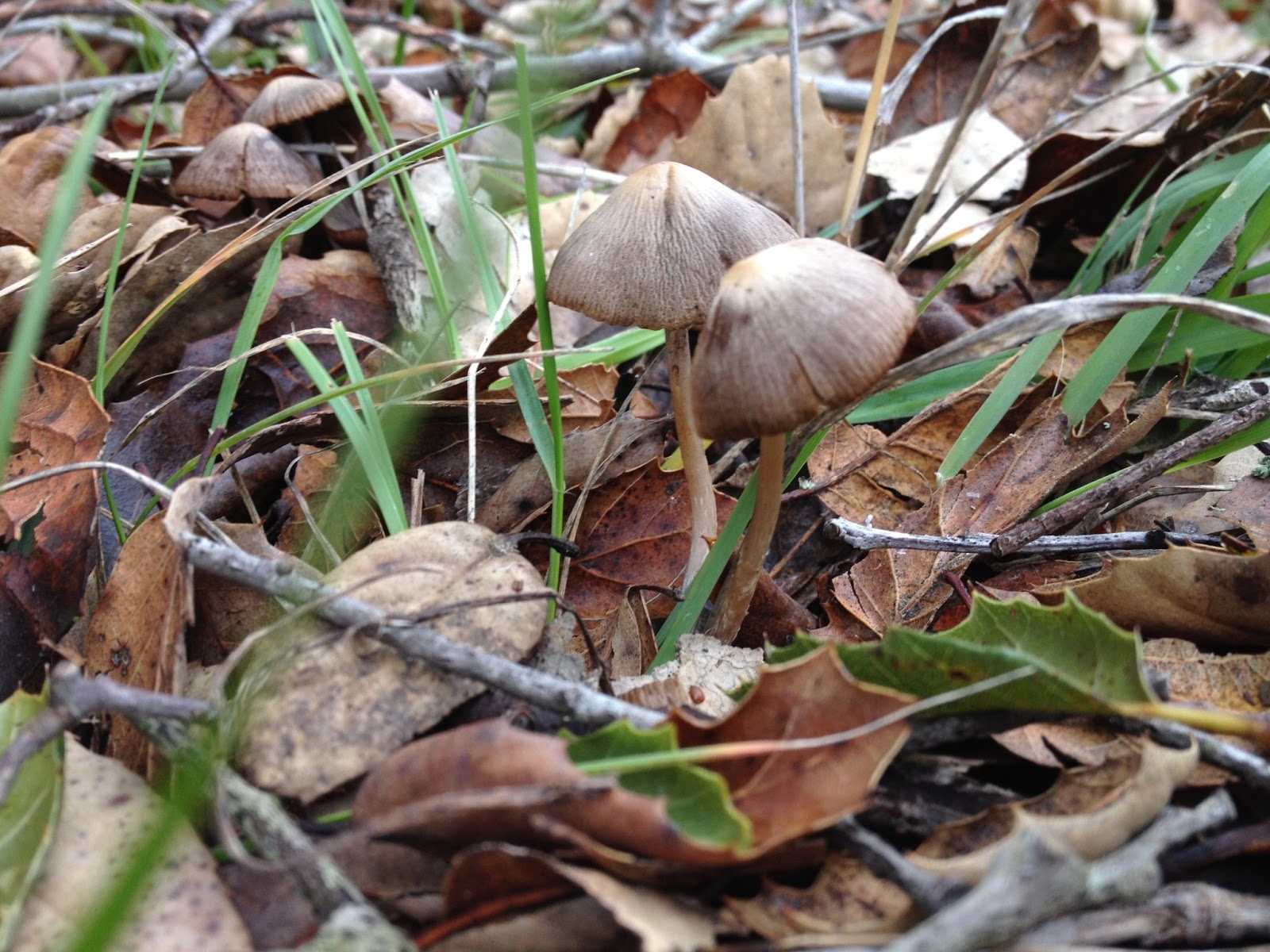
With the diverse array of plants and animals found throughout our region, the fungi kingdom is often overlooked. These fascinating organisms can be largely invisible throughout the year, living in the soil until the rains come and prompt them to “fruit.” In some species this results in the familiar shape of a mushroom, while in others the “fruit” (also called a sporocarp) remains underground.

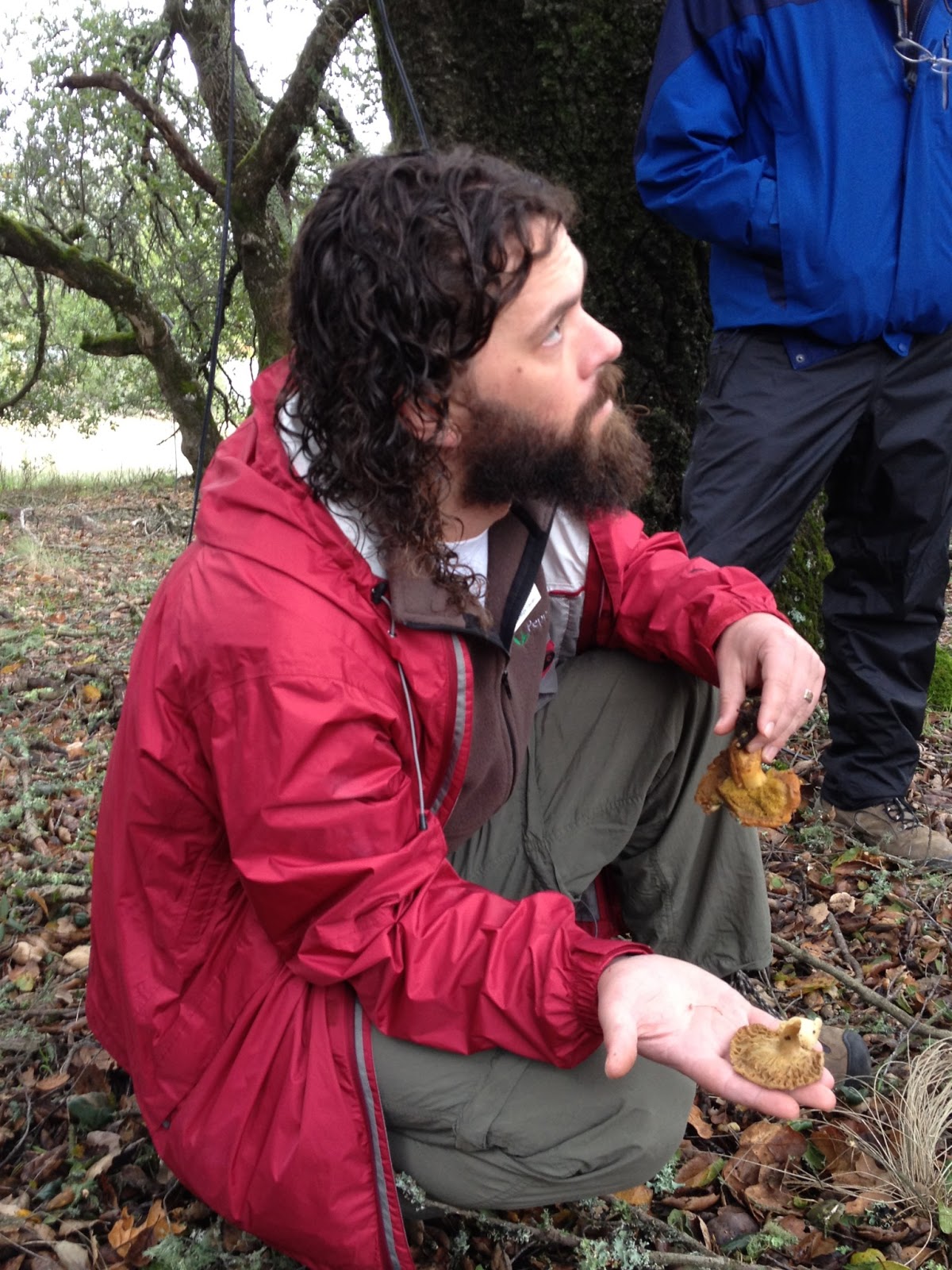
Chris Kjeldsen with a Gypsy Mushroom
Chris Kjeldsen, local mushroom expert and Professor Emeritus of Biology at Sonoma State University, visited Pepperwood in December to teach staff members about the mysterious fungi kingdom.

Beginning with a general overview, he explained that one of the most important things to know is that fungi have been on the earth for a very long time. Evidence indicates that fungi were instrumental in the spread of life from the sea to the land about 450 million years ago. 

Chris explains that “the earliest known land plant fossils show mycorrhizal associations, so the fungi are a really ancient group that are connected to higher plants in an intimate way.” 

Satharella sp.


The invasion of land by plant life came not from photosynthetic organisms alone but in conjunction with fungi, indicating the two kingdoms were closely associated even long ago. Today, lichens are a great example of this inter-kingdom cooperation. They are a compound life form consisting of a fungus and a photosynthetic organism that live in a symbiotic relationship.

Gypsy Mushroom


As we investigated the mushrooms and slime molds popping up around the Dwight Center, Chris shared a fascinating story about how he became interested in fungi. When he was in junior high, his family had a place near Fort Bragg. Chris was amazed by all of the mushrooms that seemed to pop up out of nowhere every winter, and he started collecting the most unusual to show his family.  In support of his new interest, his father encouraged him to take them to a local expert.  However many of the samples were new to the expert who said that if he really wanted to learn what these were he should meet two ladies in their 70's who lived in a remote cabin in the pygmy forest of Mendocino County.

Environmental Educator Jesse Robinson
Their cabin was accessible only by a 1.5 mile long trail through old beach terraces where the nutrients had been leached out of the soil, creating unique growing conditions to which many strange fungi had adapted. The ladies were very excited to mentor Chris with his interest in fungi. He reluctantly agreed to taste some of the fungi they had preserved, including cauliflower mushroom, an experience he was unsure he would survive! These mysterious ladies, whose last names were Kelly and Boyd, were pioneering citizen scientists-a reminder that this is not a new movement! They had been documenting in tremendous detail via natural history drawings and diagrams the mushrooms they found in the forest in addition to sending samples from the pygmy forest down to UC Berkeley to build the university’s mycology collection. Without their passion and painstaking effort to document their discoveries, many generations of scientists would have lacked access to this incredible collection!

Bird's Nest Fungi

Chris’ interest in fungi continued through high school, when he collected a fruit box of assorted mushrooms and took them to Stockton where one of his father’s colleagues at the College of the Pacific, Dr. Ken Stocking, was only able to identify one – the amanita. Chris was amazed that this biology professor with his PhD could only name a single species! From then on, his path of academic study was set and in an interested twist of fate, he later taught with Dr. Stocking at Sonoma State University.


To learn more about fungi, check out the Sonoma County Mycological Association here.